A new home inspection is an independent evaluation of a newly built house that checks the structure, systems, and finish work for defects before you take ownership.
Even a brand-new home built by a reputable builder can hide problems, and at Pure View Property Inspections, we regularly find issues in homes that just passed a municipal code check.
This guide explains what a new home inspection covers, when to schedule one, and why “new” doesn’t always mean “built right.”
What Is a New Home Inspection?
A new home inspection is a top-to-bottom review of a newly constructed house by a licensed, independent inspector who does not work for the builder. It confirms that the workmanship, materials, and major systems meet safety standards and were installed correctly.
This is different from the code inspection your city or county performs. A municipal inspector checks that the build meets minimum code. An independent home inspector works for you, looks well beyond minimum code, and documents cosmetic and functional problems the builder should fix while the home is still under warranty.
The two inspections serve different masters, which is exactly why buyers still hire their own inspector on a new build.
Do New Construction Homes Really Need an Inspection?
Yes. New construction homes need an independent inspection because builders work on tight schedules, use many subcontractors, and can miss defects that only a trained inspector catches. A passed code inspection confirms the minimum was met, not that the home is free of problems.
Homes are assembled by dozens of different trades, often under deadline pressure. A missed connection, a reversed outlet, a poorly sloped drain line, or insulation gaps can slip through.
Catching these before closing gives you leverage: the builder is contractually responsible for corrections during the warranty period, so documented findings turn into a punch list the builder fixes on their dime, not yours.
What a New Home Inspection Covers
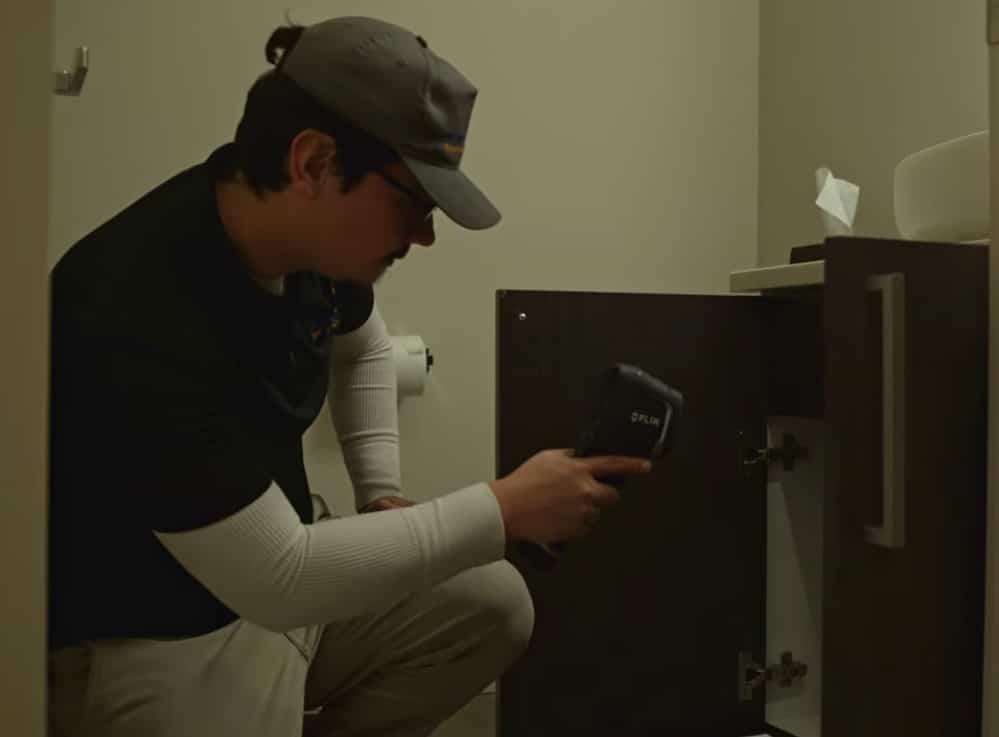
A new home inspection covers the home’s structure, exterior, major systems, and interior finishes, following a recognized standard of practice. Pure View follows the Washington State Standards of Practice and the InterNACHI standard on every inspection.
Structural and Exterior
Inspectors evaluate the foundation, framing (where visible), grading and drainage, roof, siding, flashing, gutters, windows, and doors. In the Pacific Northwest, drainage and moisture management matter more than almost anywhere, so grading, downspout runoff, and crawlspace ventilation get close attention.
Systems (Electrical, Plumbing, HVAC)
The inspector tests and documents the electrical panel and outlets, plumbing supply and drainage, water heater, and the heating and cooling system. Common new-build findings here include reversed-polarity outlets, missing GFCI protection, slow drains, and HVAC units that were never fully commissioned.
Interior and Finish Work
Floors, walls, ceilings, stairs, railings, cabinetry, and installed appliances are checked for function and quality. This is where builder “punch list” items live: doors that don’t latch, paint over defects, cracked tile, and trim gaps. Pure View delivers a photo-rich report so you can hand the builder a clear, itemized list.
When to Schedule Each Inspection (Phase, Final, 11-Month)
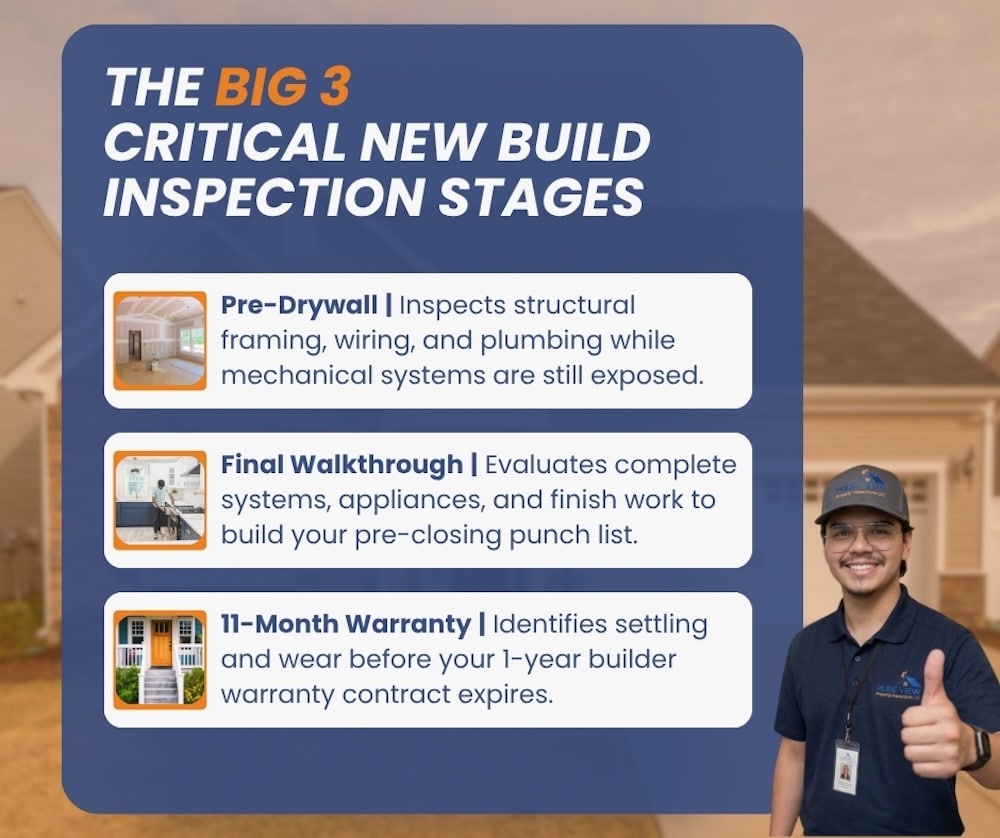
Schedule a new construction inspection at three key points: before drywall goes up, at the final walkthrough before closing, and about 11 months after move-in. Each stage catches a different category of problem, which is why Pure View offers all three as a package.
Pre-drywall / Phase Inspection
Once framing, rough plumbing, wiring, and ductwork are in, but before insulation and drywall cover them, an inspector can see structural and mechanical work that becomes hidden forever after this point. This is the single best time to catch framing and system defects.
Final walkthrough inspection
Done shortly before closing, this inspection reviews the finished home end to end: systems running, finishes complete, and everything functional. Findings become your pre-closing punch list.
11-month builder warranty inspection
Most builder warranties run one year. An inspection at around month 11 documents any defects that have surfaced during your first year, while the builder is still contractually on the hook. Buyers often call this the highest-value inspection they schedule, because settling, seasonal moisture, and system wear reveal issues the final walkthrough couldn’t.
Common Problems Found in Brand-New Homes
Even on quality builds, inspectors routinely find missing insulation, improper grading, plumbing leaks, electrical wiring errors, incomplete flashing, and HVAC that was never balanced. None of these mean the builder did poor work overall; they mean a home has thousands of components and no build is perfect. The point of the inspection is to find them while someone else is still responsible for fixing them.
Related Questions to Explore
When should you schedule a home inspection for new construction?
Ideally at three stages: pre-drywall (before insulation and drywall hide the framing and systems), at the final walkthrough before closing, and around 11 months after move-in before the builder’s warranty expires.
Is a home inspection required for new construction?
No, an independent inspection is not legally required, and it is separate from the mandatory municipal code inspection. It is optional but strongly recommended, because the code inspection only confirms minimum standards and isn’t done on your behalf.
What should you look for in a new construction home inspection?
Focus on structural work, drainage and grading, electrical safety (GFCI, correct wiring), plumbing leaks, HVAC operation, roof and flashing, and finish defects. A good inspector documents each with photos so you can hand the builder an actionable list. Learn more about our new construction inspection process.
How much does a new home inspection cost?
In the greater Seattle area, Pure View inspections start at $400, with the final price depending on the home’s square footage, age, and any add-ons like sewer scope or mold testing. See our inspection packages for bundled new-construction options.
Can the builder be present during the inspection?
Yes, and it’s often helpful. Builders who attend can see issues firsthand and schedule corrections faster. A collaborative walkthrough tends to get punch-list items resolved before closing.
When to Call a Professional
Call an independent inspector any time you’re buying a newly built home, and especially before the pre-drywall stage and before your builder’s one-year warranty runs out. A walkthrough of your own can catch obvious cosmetic issues, but framing, electrical, plumbing, and moisture problems need trained eyes and tools like thermal imaging and moisture meters.
Pure View Property Inspections is a family-owned, InterNACHI Certified team serving King and Snohomish County, including Seattle, Bellevue, Kirkland, Kenmore, Bothell, and Everett. We deliver clear, photo-rich reports within 24 to 48 hours so you can act on findings quickly. If you’re closing on a new build, our new construction inspection service covers every phase.
Conclusion
A new home inspection protects one of the largest purchases you’ll ever make, even when the paint is still fresh. Keep these takeaways in mind:
- New builds still have defects; a code pass isn’t the same as an independent inspection.
- The three highest-value times to inspect are pre-drywall, final walkthrough, and 11 months in.
- Documented findings become the builder’s responsibility during the warranty period.
Ready to protect your new home? Schedule an inspection with Pure View or give us a call.