
To get rid of black mold in your shower, spray it with undiluted white vinegar or a mild bleach mix, let it sit, scrub with a stiff brush, rinse, and dry the area fully. If the mold is inside your caulk, cut the caulk out and replace it. No cleaner can reach mold that has grown into it.
That black gunk is common in Pacific Northwest bathrooms, and most of it is surface growth you can handle yourself. At Pure View Property Inspections, we also see cases where it keeps coming back because of a hidden leak or a weak fan.
Here’s what the gunk is, how to clean each surface safely, and how to keep it gone.
What Is the Black Gunk in Your Shower?
The black gunk in your shower is usually mildew or a common surface mold. It feeds on soap scum, skin cells, and body oils. Your shower stays warm and wet most of the day, so it gives these organisms everything they need.
People often call any dark growth “black mold.” The mold most people fear, Stachybotrys chartarum, needs material that stays soaked for a long time, like drywall or wood. It rarely grows on tile and grout. The spots in most showers are other, more common species.
Mold, Mildew, or Biofilm?
Not every black spot is mold. Use this quick guide to figure out what you’re looking at.
|
What you see |
What it likely is |
What to do |
|---|---|---|
|
Flat gray or black specks on grout or tile |
Mildew or surface mold |
Clean with vinegar, peroxide, or diluted bleach |
|
Black dots under or inside the caulk |
Mold growing into the caulk |
Remove and replace the caulk |
|
Black slime around the drain or faucet |
Biofilm, sometimes linked to iron or manganese in water |
Scrub, flush the drain, consider a water test |
|
Pink or orange slime |
Bacteria (Serratia marcescens), not mold |
Clean with a bathroom disinfectant and dry surfaces |
|
Fuzzy growth with a musty smell |
Active mold, possibly with hidden moisture |
Clean, then check for a leak |
Is Black Mold in the Shower Dangerous?
Black mold in the shower is not an emergency for most healthy people, but you shouldn’t ignore it. Mold spores can cause a stuffy nose, sneezing, itchy eyes, wheezing, or a skin rash. The CDC notes that people with asthma, allergies, or weak immune systems face higher risks.
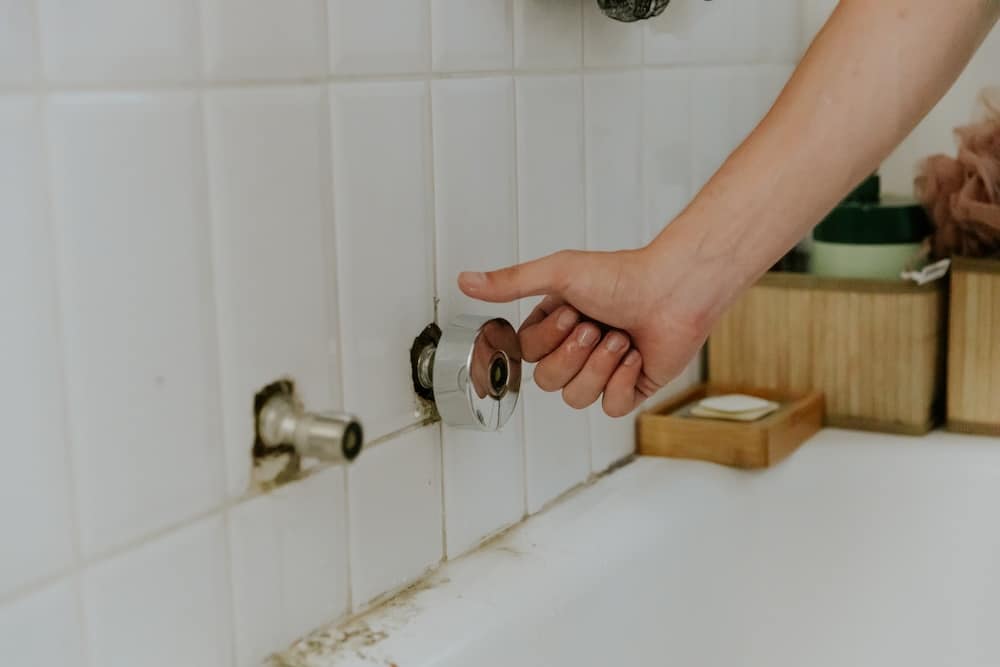
A small patch on grout is a cleaning job. The bigger concern is mold that returns fast, spreads past the tile, or comes with a musty smell in the next room. Those signs can point to water getting behind the shower walls.
What You Need Before You Start
Gather your supplies first so you don’t breathe in spores longer than you need to. Here’s what to have on hand:
- Protective gear: rubber gloves, safety goggles, and an N-95 mask
- Cleaners (pick one): white vinegar (5% acidity or higher), 3% hydrogen peroxide, or chlorine bleach
- Baking soda for a grout paste
- Tools: spray bottle, stiff nylon brush, old toothbrush, microfiber cloths, squeegee
- For caulk repair: utility knife or caulk remover tool, rubbing alcohol, and 100% silicone caulk labeled mold-resistant
Safety rule: Never mix bleach with vinegar, ammonia, or other cleaners.
These mixes create toxic gas. The EPA’s guide to mold and moisture warns against mixing bleach with ammonia-based products. If you switch cleaners, rinse the area well and let it dry first.
How to Get Rid of Black Mold in Your Shower, Step by Step
Here is the simple method that works on most showers. Plan on about an hour, including wait time.
- Ventilate the room. Turn on the exhaust fan and open a window if you have one.
- Put on your gear. Wear gloves, goggles, and a mask.
- Rinse and dry the area. Wash off loose soap scum so the cleaner can reach the mold.
- Spray your cleaner. Use undiluted white vinegar, 3% hydrogen peroxide, or a bleach mix of no more than 1 cup of bleach per 1 gallon of water.
- Let it sit. Give vinegar about 1 hour. Give peroxide or bleach 10 to 15 minutes.
- Scrub. Use a stiff brush on tile and a toothbrush on grout lines.
- Rinse well. Wash away the cleaner and loosened mold with warm water.
- Dry everything. Wipe the walls and floor with a towel or squeegee. Run the fan for at least 30 minutes.
- Check again in a week. If dark spots return fast, the mold may be inside the caulk or grout, or moisture may be coming from behind the wall.
Best Way to Clean Shower Mold by Surface
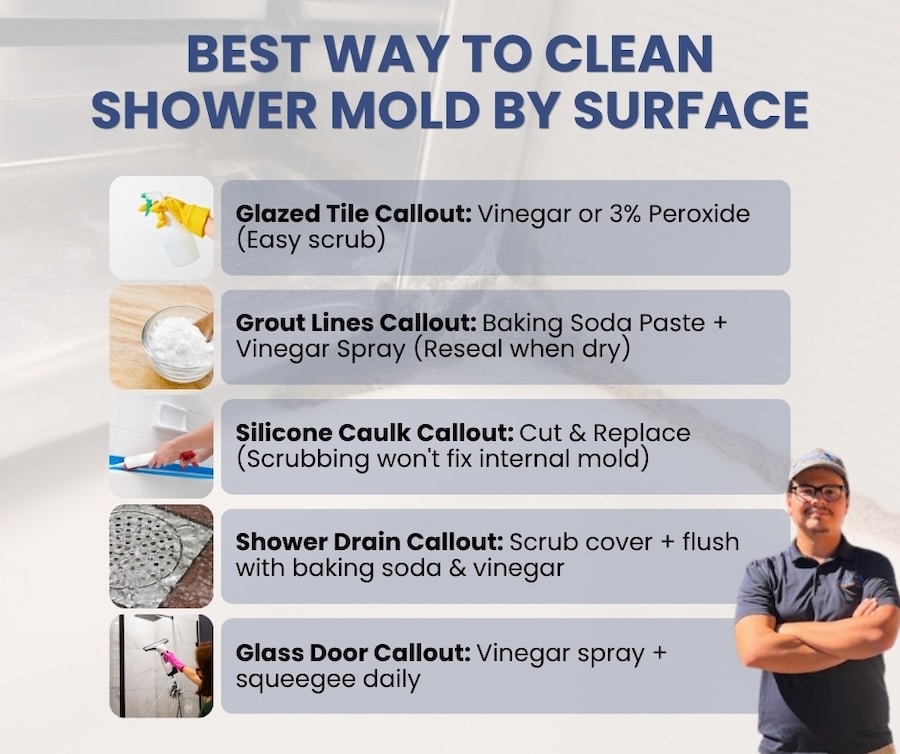
The best way to clean shower mold depends on the surface. Hard, non-porous surfaces clean up easily. Porous ones like grout and caulk let mold grow roots below the surface.
|
Surface |
Best cleaner |
Notes |
|---|---|---|
|
Glazed tile |
Vinegar, peroxide, or diluted bleach |
Cleans easily; dry after |
|
Grout |
Baking soda paste, then vinegar or peroxide |
Seal grout after it dries |
|
Silicone caulk |
Replace it |
Stains inside caulk won’t scrub out |
|
Fiberglass or acrylic tub |
Vinegar or a non-abrasive bathroom cleaner |
Skip stiff brushes and powders that scratch |
|
Glass door |
Vinegar |
Squeegee after every shower |
|
Shower curtain or liner |
Machine wash warm with detergent |
Replace if spots stay |
|
Drain |
Scrub, then flush with hot water |
Black slime is often biofilm |
Shower Grout
Grout is porous, so mold can grow into it. Mix baking soda with a little water to make a thick paste. Spread it on the grout lines, spray with vinegar or peroxide, and wait 10 minutes. Scrub with a toothbrush and rinse.
Once the grout is fully dry, usually after 24 to 48 hours, apply a grout sealer. Sealed grout soaks up less water, so mold has a harder time coming back.
Shower Caulk
If black spots are under or inside the caulk bead, you need to replace the caulk. Bleach might lighten the stain, but the mold stays.
To re-caulk:
- Cut out the old caulk with a utility knife or caulk tool.
- Clean the joint with vinegar or peroxide and let it dry for a full day.
- Wipe the joint with rubbing alcohol.
- Apply a smooth bead of 100% silicone caulk labeled mold-resistant.
- Let it cure for the time listed on the tube, often 24 hours, before you shower.
Shower Drain
Black slime in or around a drain is often biofilm, not true mold. Remove the drain cover and scrub it with an old toothbrush. Pour a half cup of baking soda down the drain, then a cup of vinegar. Wait 15 minutes and flush with hot water.
If the slime shows up on faucets and toilets too, your water may be high in iron or manganese. A water test can tell you.
Why Does Shower Mold Keep Coming Back?
Shower mold keeps coming back when the moisture problem behind it isn’t fixed. Cleaning removes what you can see, but mold returns if the room stays damp or water is getting where it shouldn’t.
As home inspectors, these are the causes we find most often:
- A weak or missing exhaust fan. A common rule of thumb is 1 CFM of fan power per square foot of bathroom floor. Many older fans move far less.
- A fan that vents into the attic. Bath fans should vent outside. A fan that dumps moist air into the attic can cause mold up there too.
- Failed grout or caulk. Cracks let water seep behind the tile, where it feeds hidden mold.
- A leaking shower valve or pan. Water can drip inside the wall or under the floor for months before you see it.
- Short fan run time. Turning the fan off the moment you step out leaves the room wet for hours.
During a mold inspection, we use moisture meters and thermal imaging to find damp spots behind shower walls without cutting into them. That tells you whether you have a cleaning problem or a water problem.
How to Prevent Mold in Your Shower
The best way to prevent shower mold is to keep the room dry.
Western Washington makes that harder, and Seattle humidity leads to mold in so many PNW homes because the damp outdoor air adds to the moisture your shower already creates.
These daily habits make a big difference:
- Run the exhaust fan during your shower and for at least 30 minutes after.
- Squeegee walls and glass doors after each use.
- Leave the shower door or curtain open so it can dry.
- Wash bath mats and towels weekly.
- Spray the shower with vinegar once a week and wipe it down.
- Keep indoor humidity between 30% and 50%. In damp months, a dehumidifier can help with black mold by pulling that extra moisture out of the air.
- Reseal grout about once a year.
Related Questions to Explore
Does vinegar kill black mold in the shower?
Yes, undiluted white vinegar kills many common shower molds on hard surfaces. Spray it on, wait about an hour, then scrub and rinse. It works less well on porous materials like caulk, where mold grows below the surface.
Does bleach kill mold in the shower?
Bleach kills mold on hard, non-porous surfaces like glazed tile. On porous grout and caulk, it often just lightens the stain while the mold’s roots survive. If you use it, mix no more than 1 cup of bleach per gallon of water, ventilate the room, and never mix it with other cleaners.
Can hydrogen peroxide remove shower mold?
Yes. Spray 3% hydrogen peroxide on the mold, wait 10 to 15 minutes, then scrub and rinse. It has no harsh fumes and won’t fade colored grout the way bleach can.
What is the pink slime in my shower?
Pink or orange slime in a shower is usually a bacterium called Serratia marcescens, not mold. It’s sometimes called red mold because of the color, but it’s the same kind of damp-spot growth, and a bathroom disinfectant cleans it up.
Can black mold grow behind shower walls?
Yes. If water gets past cracked grout, failed caulk, or a leaking valve, mold can grow on the drywall or wood behind your tile. Signs include loose tiles, soft spots, peeling paint on the other side of the wall, and a musty smell that won’t go away.
Does a home inspection check for mold in the bathroom?
A standard home inspection looks for signs of moisture and visible mold, including in bathrooms. Mold testing with air or surface samples is usually a separate service. Read more in does a home inspection check for mold.
When to Call a Professional
You can clean most shower mold yourself. The EPA says a homeowner can usually handle a moldy area smaller than about 10 square feet, roughly a 3-foot by 3-foot patch.
Call a professional when:
- The mold covers more than 10 square feet.
- It comes back within a few weeks after a deep clean.
- You smell a musty odor outside the shower.
- Tiles feel loose, or the wall feels soft.
- You see stains on the ceiling below the bathroom.
- Someone in your home has asthma, allergies, or a weak immune system.
- You’re buying or selling a home and want documented results.
Pure View Property Inspections offers mold and moisture inspections across King and Snohomish Counties. We use thermal imaging, moisture meters, and lab-tested air and surface samples to find the source. We don’t do mold removal, so our advice stays unbiased. You get clear answers and next steps, often with a same-day report.
Conclusion
- Most black gunk in the shower is surface mold, mildew, or biofilm you can clean with vinegar, peroxide, or diluted bleach.
- Mold inside caulk needs new caulk, not more scrubbing.
- Mold that keeps coming back usually points to a moisture problem, like a weak fan or a hidden leak.
If your shower mold won’t stay gone, let us find out why. Schedule a mold inspection with Pure View Property Inspections or get a quote today.