A home pest inspection is a focused evaluation of a property for signs of termites, carpenter ants, wood-boring beetles, rodents, and the moisture damage that invites them. At Pure View Property Inspections, we check the accessible areas most likely to hide trouble: the foundation, crawlspace, attic, and exterior, and hand you a clear, photo-rich report.
In the Seattle area, the bigger threats are usually carpenter ants and rot, not the subterranean termites you hear about back east. This guide covers what a pest inspection includes, what it costs, whether it comes with your home inspection, and when you actually need one.
What Is a Home Pest Inspection?
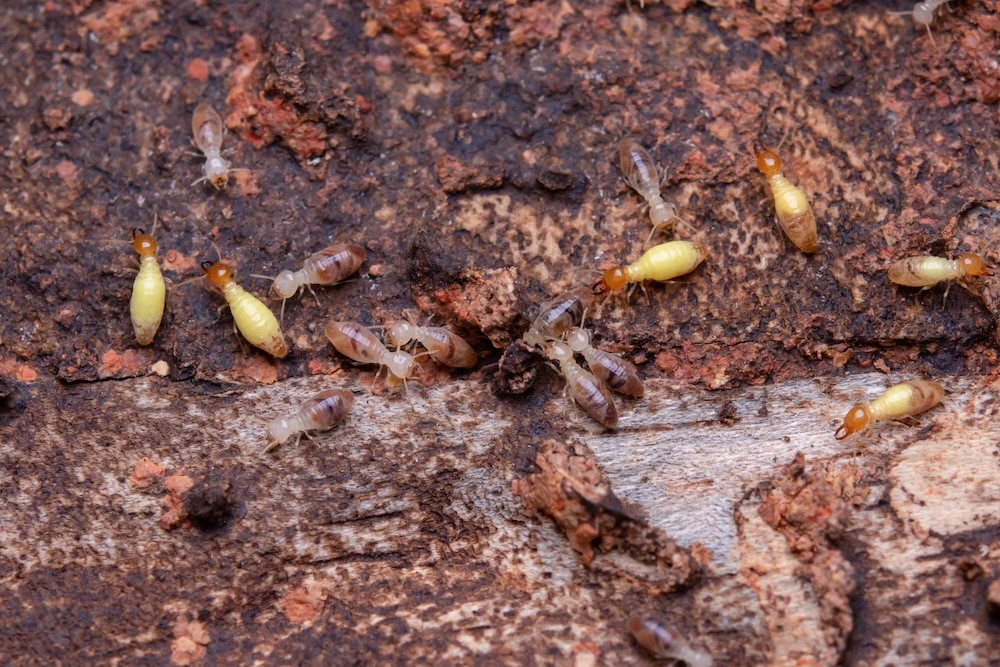
A home pest inspection is a visual assessment of a property that identifies active infestations, past pest damage, and conditions that make future infestations likely. Specifically, inspectors look for wood-destroying organisms (WDO) such as termites, carpenter ants, and wood-boring beetles, along with rodents and the moisture problems that draw them in.
Importantly, it is not pest treatment. Rather, the inspection tells you what is happening in the home and where the vulnerabilities are. Then, if treatment is needed, that is a separate step handled by a licensed pest control company. In short, think of the inspection as the diagnosis and the report as your action plan.
Typically, buyers order these inspections during a real estate transaction. However, current homeowners use them too, especially before a big remodel or after spotting something suspicious in the crawlspace.
What Does a Home Pest Inspection Cover?
A pest inspection covers every accessible area where pests hide or where wood meets moisture.
During a Pure View inspection, the areas we examine include:
- Foundation and crawlspace: mud tubes, damaged framing, moisture, and rodent activity
- Attic: droppings, nesting material, chewed wiring, and beetle exit holes
- Exterior walls and siding: entry points, wood-to-soil contact, and rot
- Decks, porches, and fences: untreated wood that touches the ground
- Around plumbing and utility penetrations: gaps that let rodents and insects inside
We document findings with color photos and plain-language notes, so you know exactly what was found and where. Because our inspectors use thermal imaging and moisture meters on the home inspection itself, hidden moisture (the number-one driver of pest problems in this climate) rarely goes unnoticed.
The Pests That Actually Matter in the Pacific Northwest
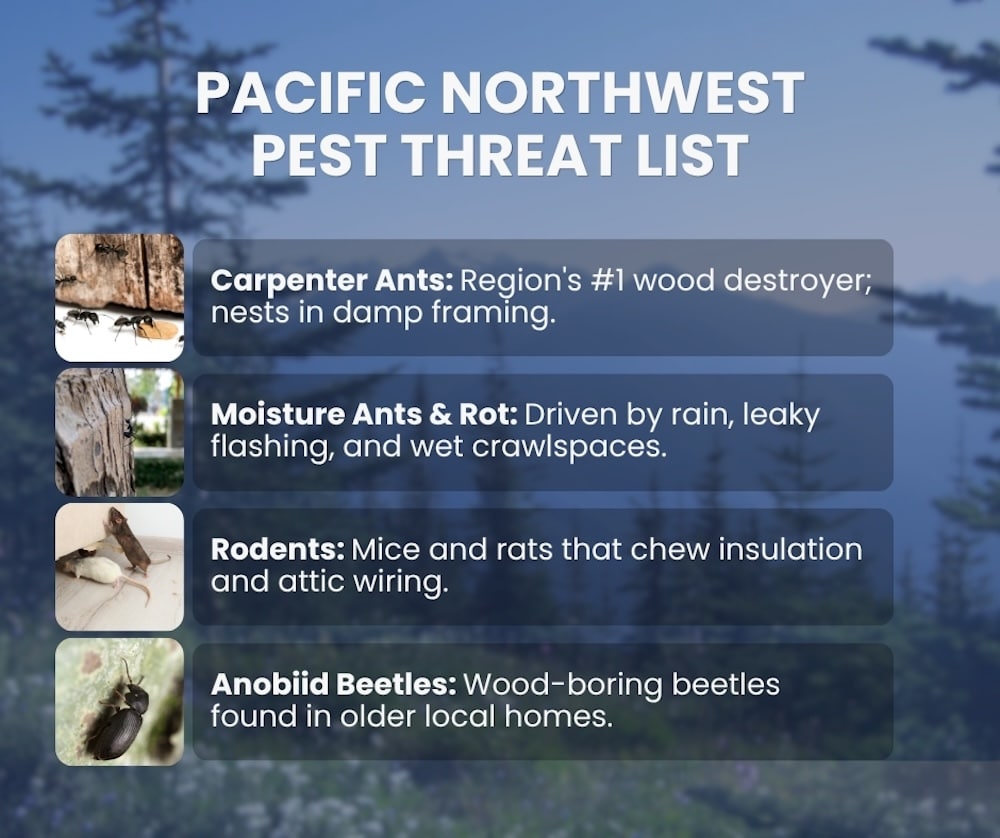
Admittedly, termite marketing scares buyers who move here from the South. However, Western Washington sits in a low-pressure zone for the aggressive subterranean termites common elsewhere. Instead, the pests that cause real damage to Seattle-area homes are:
- Carpenter ants: they hollow out damp or damaged wood to nest, and as a result, they are the most common wood destroyer in the region
- Moisture ants and wood-decay fungus: typically a symptom of the wet crawlspaces and leaky flashing that come with our rain
- Rodents: namely mice and rats that chew wiring and insulation, especially in older homes
- Anobiid (deathwatch) beetles: likewise a real crawlspace concern in older PNW housing stock
Ultimately, knowing the local threat list is why a Seattle-area inspector beats a national checklist. In short, the damage patterns here look different than they do in Texas or Florida.
Is a Pest Inspection Included in a Home Inspection?
Not automatically. While a standard home inspection notes visible signs of pests it happens to find, a dedicated pest or WDO inspection is a separate, deeper evaluation with its own report. In other words, the two overlap, but they are not the same service.
At Pure View, however, the pest and WDO inspection is offered as an add-on to your home inspection, so one visit covers both. That matters during a purchase, because many lenders and buyers want a signed WDO report on record. Moreover, a passing note buried in a general inspection summary does not always satisfy that requirement.
Therefore, if you are buying, ask up front whether your inspection package includes a pest or WDO component. Ultimately, bundling the two saves a second appointment and gives you one clear picture of the home’s condition.
How Much Does a Home Pest Inspection Cost?
Typically, a standalone pest inspection runs from about $75 to $150 when added to a home inspection, and more if ordered as a separate visit. However, the exact price depends on the home’s square footage, age, crawlspace access, and your location.
For comparison, Pure View home inspections start at $400, and a pest or WDO add-on is priced on top of that based on the home’s size and access. As a result, bundling the pest inspection with your home inspection is almost always cheaper than scheduling two trips. In addition, our packages and Pay at Close options make it easier to budget the whole thing into your closing.
Still, weigh that cost against what a missed carpenter ant colony or a rotted beam can cost to repair, often thousands of dollars. Ultimately, for most buyers, the inspection pays for itself the moment it catches one hidden problem.
How to Prepare for a Home Pest Inspection
You do not have to do much, but a little prep helps the inspector reach the areas that matter.
Before the appointment:
- Clear access to the crawlspace and attic hatches: move boxes, bins, or furniture blocking the openings
- Trim back shrubs and firewood stacked against the exterior walls
- Unlock gates, sheds, and detached garages so the full property can be checked
- Note anything you have seen: droppings, sawdust-like frass, or insect wings near windowsills
- Fix easy access issues: like a padlocked crawlspace door
The more the inspector can see, the more complete your report. Anything that cannot be accessed gets noted as a limitation, which is worth knowing before you rely on the results.
Related Questions to Explore
Does a home inspection include pest inspection?
A general home inspection flags obvious pest evidence. However, it does not replace a dedicated pest or WDO inspection. Therefore, for a full pest evaluation with its own report, add the pest and WDO inspection to your home inspection. For a close parallel, see our guide on what a home inspection does and does not check for mold.
Who pays for a home pest inspection?
In most Washington purchases, the buyer pays for the pest inspection as part of their due diligence, just as they pay for the home inspection. In some deals, however, the seller orders a WDO report ahead of listing, or alternatively agrees to cover it during negotiation. Ultimately, your real estate agent can advise on local norms.
How often should I schedule a pest inspection?
First, buyers get one during the purchase. After that, homeowners in this climate benefit from a check every two to three years, and sooner if you spot droppings, frass, or soft wood. In particular, homes with a history of moisture problems or an unconditioned crawlspace are worth watching more closely.
What pests are checked during a home inspection?
In the Seattle area, inspectors focus on carpenter ants, moisture ants, wood-decay fungus, anobiid beetles, and rodents. Additionally, termites are checked for as well. Still, they are far less common here than in the southern and eastern United States.
Do banks or the VA require a pest inspection?
Actually, it depends on the loan. Although VA loans in Washington do not always mandate a WDO report the way they do in high-termite states, individual lenders and appraisers can still require one. For that reason, ask your loan officer early, so a last-minute report request does not delay closing.
When to Call a Professional
Call a professional pest inspector any time you are buying a home, selling a home, or seeing warning signs you cannot explain. Sawdust-like frass near baseboards, hollow-sounding wood, mud tubes on the foundation, or rodent droppings in the crawlspace all warrant a trained set of eyes.
For homes across Seattle, Bellevue, Kirkland, Kenmore, and the rest of King and Snohomish County, Pure View pairs the pest and WDO inspection with a full home inspection and delivers a photo-rich report within 24 hours, often the same day.
As a family-owned, InterNACHI Certified team, we explain findings in plain language and point you toward trusted local treatment pros when they are needed, no pressure, no upsell.
Conclusion
A home pest inspection protects one of the biggest purchases you will ever make.
To recap:
- It checks for WDO like carpenter ants, beetles, and rot, plus rodents, not just termites
- It is a separate service from a standard home inspection, best bundled as an add-on
- Local knowledge matters, because Pacific Northwest pest risks look different than they do elsewhere
Ready to protect your home? Schedule your pest and WDO inspection with Pure View and buy with confidence.