
The fastest way to increase your home’s value before selling is not a fresh coat of paint or a kitchen remodel. It is fixing the problems a home inspector will find anyway.
At Pure View Property Inspections, we walk through homes with buyers’ inspectors standing beside us every week, and the pattern rarely changes: sellers spend thousands on curb appeal while a cracked foundation, an aging roof, or a hidden leak quietly cuts far more from their sale price.
This guide covers the inspection-related fixes that protect your asking price, plus when a pre-listing inspection can help you catch them first.
The Fixes That Actually Protect Your Sale Price
The improvements that best protect your sale price are the ones that keep your home from failing a buyer’s inspection, not the ones that make it look nicer in photos.
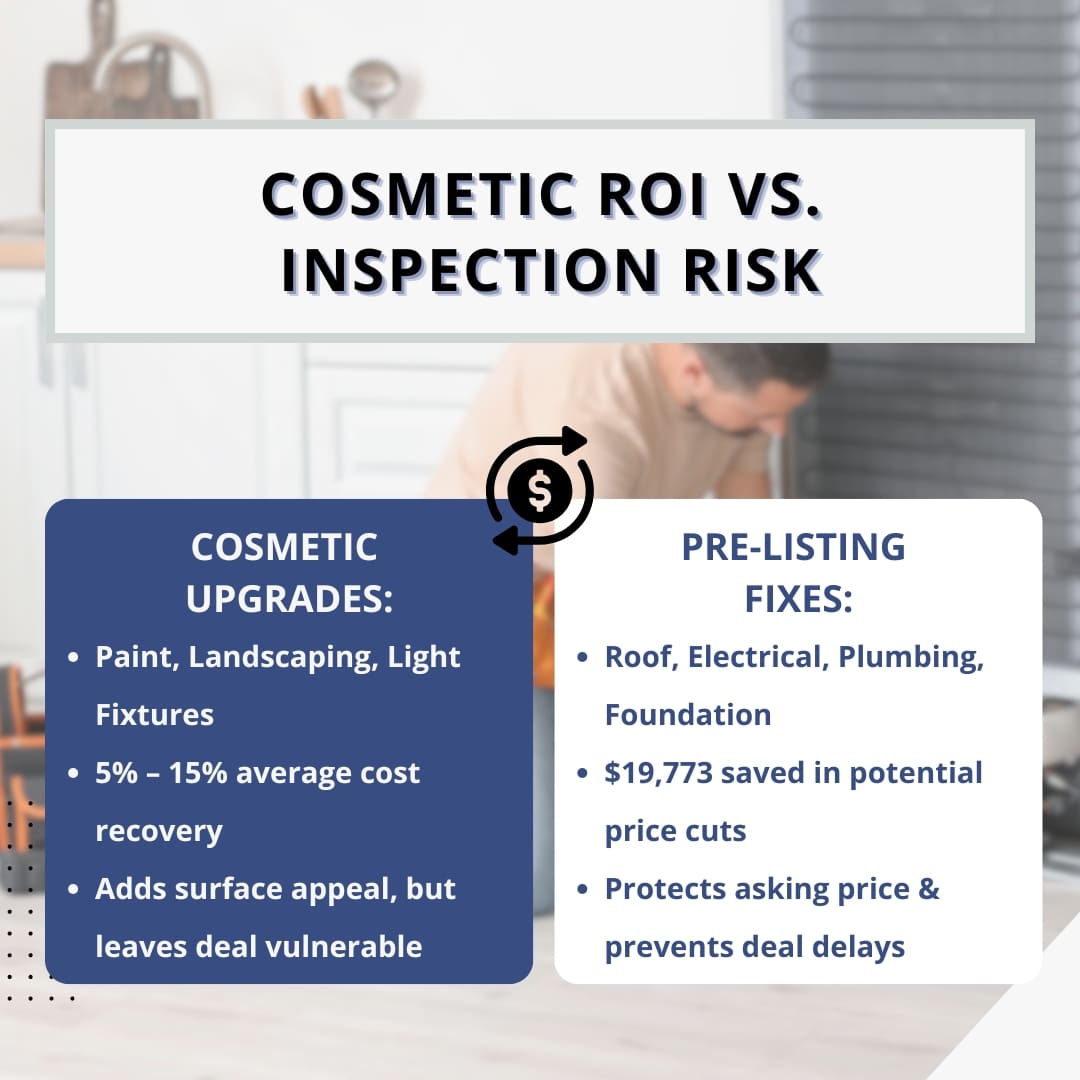
Cosmetic projects like paint, landscaping, and light fixtures typically return 5 to 15% of their cost in added value. That is real, but it is small compared to what a failed inspection can cost you. Sellers who skip repairs before listing often end up negotiating them anyway, on a buyer’s timeline and often at a worse price.
Roughly 1 in 5 home sales run into a delay or price renegotiation after the inspection, and the average seller ends up covering close to $19,773 in post-inspection repairs, according to a Clever Real Estate survey of recent home sales.
None of these repairs are legally required. But lenders and insurers often will not sign off on a home with active leaks, exposed wiring, or a furnace that does not run. The repair usually happens either way. The only choice is whether you make it on your schedule or the buyer’s.
Here is how the two categories compare in practice:
|
Improvement type |
Typical cost |
What it actually does for your sale |
|---|---|---|
|
Cosmetic (paint, landscaping, light fixtures) |
$500–$5,000 |
Recovers roughly 5–15% of cost in perceived value |
|
Inspection-related (roof, electrical, plumbing, foundation) |
$300–$8,000+ per item |
Prevents the deal delays, price cuts, and ~$19,773 average post-inspection repair bill that cosmetic work cannot touch |
The Big Four Inspection Findings That Cut Sale Price
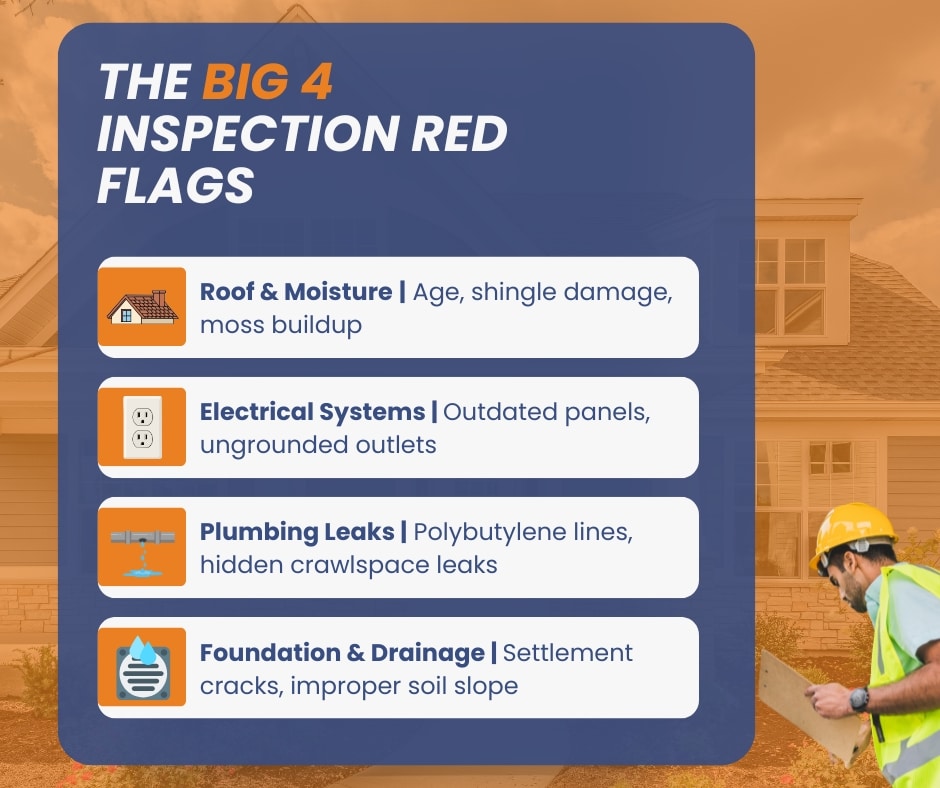
These four systems come up in nearly every inspection report, and problems here worry buyers more than any outdated countertop ever will.
Roof condition and age
A roof nearing the end of its life is one of the fastest ways to lose a buyer’s confidence. Most asphalt shingle roofs last 20 to 25 years, and a full replacement in our area typically runs $8,000 to $16,000. Missing shingles, soft spots, or moss buildup (common in the wet Puget Sound climate, where the average is around 150 rainy days a year) signal deferred maintenance even if the roof is not actively leaking.
A pre-listing roof check and a simple gutter cleaning can head off a request for a full replacement credit.
Electrical panel and wiring
Outdated panels (think Federal Pacific or Zinsco brands), double-tapped breakers, and ungrounded outlets are common flags in older homes across Seattle, Kirkland, and Bellevue. A panel upgrade generally costs $1,500 to $4,000, well below what most buyers will ask for once a lender’s underwriter sees “safety hazard” on an inspection report.
These issues raise safety concerns for buyers and their lenders, so an electrician’s fix now is almost always cheaper than a buyer’s contractor quote later.
Plumbing leaks and water intrusion
Slow leaks under sinks, in crawlspaces, or around water heaters cause damage long before anyone notices a stain. Older homes in our service area sometimes still have polybutylene supply lines, which insurers flag on sight. In our region’s humid crawlspaces, prolonged moisture also invites wood rot and pests.
Checking supply lines, shutoff valves, and the water heater’s age ahead of time catches small problems before they become inspection-report red flags.
Foundation cracks and drainage
Hairline cracks are often cosmetic, but stair-step cracks, uneven floors, or water pooling near the foundation point to drainage or settlement issues. Foundation repairs can run anywhere from $2,000 for minor crack sealing to $10,000 or more for underpinning.
Grading the soil away from the house and clearing downspouts are inexpensive fixes that prevent a much bigger conversation with a buyer’s inspector.
HVAC and Mechanical Systems Buyers Will Scrutinize
The first thing an inspector answers about your HVAC system is whether it works safely and reliably right now, not how new it looks.
Buyers and their inspectors check the furnace or heat pump’s age, maintenance history, and whether it heats and cools evenly through the house. Most furnaces last 15 to 20 years, and full replacement usually runs $5,000 to $10,000.
A furnace with a cracked heat exchanger or a missing carbon monoxide detector is a safety flag that can stall a closing on its own. Simple upkeep- changing filters, scheduling a tune-up, and keeping service records- goes a long way toward a clean HVAC section on the report.
Homes in our service area (Seattle, Bothell, Snohomish, Lynnwood, and nearby suburbs) also benefit from a quick check of ductwork in crawlspaces, where moisture and pests tend to collect.
Termites, Moisture, and the Hidden Damage Buyers Notice
Wood-destroying organisms and excess moisture are two of the most value-damaging findings on any inspection report, mainly because buyers cannot see them without help.
Termite damage is easy to miss until a licensed inspector points it out. If you are unsure what to look for, this guide on how to tell if termites have wings breaks down the visual differences that matter before you assume it is just an ant problem.
A crawlspace or basement with high humidity is just as concerning to buyers, since it often leads to mold. Our own post on whether a home inspection checks for mold explains what inspectors document and why it matters for a sale.
Two mechanical fixes make an outsized difference here. First, confirm your sump pump actually works before you list. These are signs a sump pump is failing worth checking now rather than after an offer falls through.
Second, in homes with damp crawlspaces, a dehumidifier system running under the house can keep humidity low enough to prevent the mold and wood rot that show up on inspection reports. If your home is older, our post on common issues inspectors find in older Seattle homes covers several of these same problem areas in more depth.
Radon is worth a mention too, since it is invisible and common in our region’s soil. The EPA’s guidance on radon and real estate transactions explains why testing before listing, rather than after a buyer requests it, keeps you in control of the timeline and the cost.
Why a Pre-Listing Inspection Beats Guessing What to Fix
A pre-listing inspection tells you exactly what a buyer’s inspector will find, before they find it.
Instead of guessing which systems need attention, a licensed inspector follows the same InterNACHI Standard of Practice that most buyer’s inspectors use. That covers the roof, structure, electrical, plumbing, and HVAC in one visit.
You get a prioritized repair list, room to shop around for contractors instead of accepting the first bid during a tight closing window, and fewer surprises that could delay or derail the sale.
Our pre-listing inspection service is built around exactly this: giving Seattle-area sellers a clear picture of their home’s condition while they still have time to act on it, before a buyer’s deadline forces the decision.
Related Questions to Explore
What hurts home value the most?
Structural and safety issues, like foundation movement, an unsafe electrical panel, or an aging roof, hurt value more than any cosmetic shortfall. These are the findings most likely to scare off a buyer or trigger a price renegotiation.
Should I fix things before a home inspection?
Yes, especially anything related to safety or active water damage. Fixing known issues before a buyer’s inspection means you control the cost and the contractor. This way you are not negotiating repairs under deadline pressure.
What fixes are mandatory after a home inspection?
Nothing is legally mandatory, but lenders often will not finance a home with active leaks, exposed wiring, or a non-functioning furnace. In practice, these items usually get fixed one way or another before closing.
Should I get a pre-listing inspection?
If your home is more than 10 to 15 years old or you are unsure of its condition, yes. A pre-listing inspection gives you time to address issues on your own terms rather than a buyer’s.
What is the biggest red flag in a home inspection?
Active water intrusion and structural movement top the list. Both point to ongoing damage rather than a one-time issue, which makes buyers (and their lenders) far more cautious.
How much do sellers typically spend on repairs after inspection?
Sellers who wait until after a buyer’s inspection to address problems spend close to $19,773 on average, per Clever Real Estate. Addressing the same issues before listing usually costs less and preserves your negotiating position.
Can a home inspection kill a deal?
Yes. Roughly 1 in 5 home sales hits a delay or falls apart after the inspection. Usually over a major finding like a roof, foundation, or electrical issue rather than anything cosmetic. Catching these issues before listing is the best way to avoid that outcome.
When to Call a Professional
Some fixes, like tightening a cabinet hinge or touching up paint, are simple weekend projects. Others are not, and treating them like DIY jobs can cost you more at closing than the repair itself.
Roof damage, foundation movement, electrical panel issues, and anything involving mold or radon call for a licensed professional. Buyers’ lenders will want documentation that the work was done correctly. A homeowner’s own repair is rarely enough on its own.
This is where a pre-listing inspection earns its cost many times over. Elias Pedroza, our InterNACHI Certified Professional Inspector, walks your home before it ever hits the market. He flags exactly what needs attention, and hands you a report within 24 hours in most cases.
Every inspection includes infrared thermal imaging at no extra charge. Our $25,000 Honor Guarantee backs the accuracy of what we find. If you are selling anywhere in Seattle, Kirkland, Bellevue, Redmond, or the surrounding Puget Sound area, reach out. We will help you figure out where to start.
Conclusion
Increasing your home’s value before selling comes down to protecting it from the findings that scare buyers most. Findings such as roof age, electrical safety, plumbing leaks, foundation movement, and moisture damage. Cosmetic upgrades help at the margins. But fixing what an inspector will find protects far more of your final sale price.
A pre-listing inspection is the clearest way to see your home the way a buyer’s inspector will. That way, you still have time to act on it. Schedule a pre-listing inspection with Pure View Property Inspections before you list, and go into negotiations with confidence instead of guesswork.