
To get rid of mold on walls, put on gloves and a mask, then wash the spot with a mix of water and dish soap or spray it with white vinegar. Let it sit, wipe it gently, and dry the wall fast with a fan. That works for small patches on painted or sealed walls.
Unpainted drywall that has grown mold usually needs to be cut out, because the mold grows into the paper.
Seattle-area homes see a lot of wall mold, especially on cold outside walls in winter. At Pure View Property Inspections, we find it behind furniture, in closets, and in bathrooms.
Here’s how to clean it safely and keep it from coming back.
Is It Mold, Mildew, or Dirt?
Most dark spots on a wall are mold, mildew, or plain dirt. Mildew is flat and powdery, and usually gray or white. Mold can be fuzzy or slimy and comes in black, green, or brown. Dirt wipes off and doesn’t spread.
Try this quick test, which paint maker Sherwin-Williams recommends: dab a drop of household bleach on the spot with a cotton swab. If the spot lightens within a minute or two, it’s likely mildew or mold. If it stays dark, it’s probably dirt.
Test on a small, hidden area, since bleach can mark some paints.
|
Sign |
Mildew |
Mold |
Dirt |
|---|---|---|---|
|
Look |
Flat, powdery |
Fuzzy, slimy, or blotchy |
Smudged, even |
|
Color |
Gray or white |
Black, green, brown |
Gray or brown |
|
Smell |
Light, musty |
Strong, musty |
None |
|
Spreads over time |
Slowly |
Yes |
No |
|
Bleach drop test |
Lightens |
Lightens |
Stays dark |
Why Is Mold Growing on My Walls?
Mold grows on walls when moisture stays on or inside them. Mold spores are in almost all indoor air. They only grow when they find water and something to feed on, like the paper on drywall, dust, or paint.
These are the most common causes we see in Western Washington homes:
- Condensation on cold walls. Warm, moist indoor air hits a cold outside wall and turns to water. Corners and spots behind dressers and beds are common, since air can’t move there.
- High indoor humidity. Cooking, showers, and drying clothes indoors all add moisture. Our damp climate is a big reason Seattle humidity leads to mold in so many PNW homes.
- Plumbing leaks. A slow drip from a supply line or drain inside the wall can feed mold for months.
- Roof, window, or siding leaks. Rain can get into walls through failed flashing, cracked caulk, or worn window seals.
- Poor ventilation. Bathrooms and laundry rooms without working exhaust fans trap wet air.
Fixing the moisture source matters more than the cleaner you pick. If you skip that step, the mold will come back.
Safety Gear and Rules Before You Clean
Protect yourself before you touch wall mold. Scrubbing and wiping can release spores into the air.
- Wear an N-95 mask, rubber gloves, and goggles.
- Open windows and run a fan pointed outside.
- Close the door to the room to keep spores from spreading.
- Move furniture away from the wall and lay down a drop cloth.
- Never mix bleach with ammonia, vinegar, or other cleaners. These mixes create toxic gas.
The EPA’s mold cleanup guide recommends scrubbing mold off hard surfaces with detergent and water, then drying the area completely.
How to Get Rid of Mold on Walls, Step by Step
Follow these steps for mold patches smaller than about 10 square feet.
- Fix the moisture first. Stop any leak and lower the humidity in the room.
- Put on your gear. Mask, gloves, and goggles.
- Mist the area lightly with water. This keeps spores from floating into the air while you work.
- Apply your cleaner. Use warm water with a few drops of dish soap, undiluted white vinegar, or a bleach mix of no more than 1 cup of bleach per 1 gallon of water.
- Let it sit. Give vinegar about 1 hour. Give bleach or soap solutions about 10 minutes.
- Wipe or scrub. Use a soft sponge on painted walls. Use a stiff brush only on concrete, block, or other hard surfaces.
- Rinse. Wipe the area with a clean, damp cloth.
- Dry it fast. Run a fan or dehumidifier until the wall is fully dry, ideally within 24 to 48 hours.
- Bag and toss your rags and sponges. Don’t reuse them.
- Watch the spot. If mold returns within a few weeks, there’s likely a moisture problem you haven’t found yet.
How to Get Mold Off Painted Walls
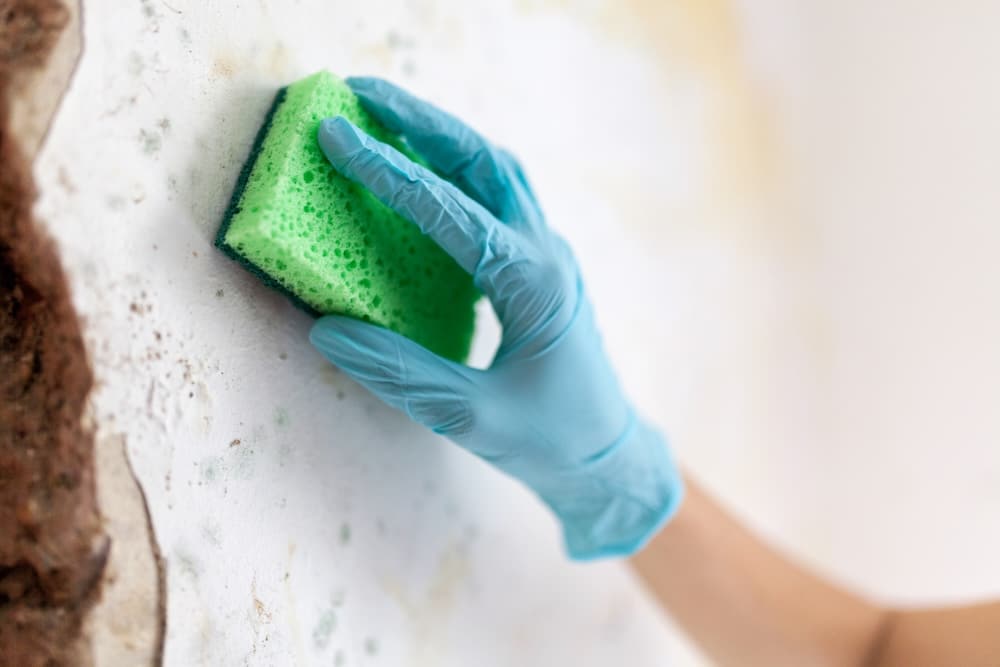
To get mold off painted walls, use a gentle cleaner and a soft sponge so you don’t strip the paint. Start mild and only move to stronger cleaners if you need to.
- Test a hidden spot first. Some flat or matte paints fade or streak when cleaned.
- Start with dish soap and warm water. This works well on semi-gloss and satin paint.
- Move to white vinegar if spots remain. Paint maker Sherwin-Williams suggests vinegar for freshly painted walls, since it’s less likely to discolor them.
- Blot, don’t soak. Too much water can soak through paint into the drywall.
- Don’t scrub hard. Scrubbing breaks the paint film and gives mold a new place to grow.
- Dry the wall right away with a towel and a fan.
If the stain is still there after cleaning, the mold may have grown into the drywall under the paint. See the next sections for how to tell.
Best Mold Cleaners by Wall Type
The best cleaner depends on what your wall is made of. Porous surfaces soak up moisture and let mold grow roots below the surface.
| Wall type | Best approach | Notes |
|---|---|---|
| Painted drywall (satin, semi-gloss) | Dish soap and water, then vinegar | Test first; use a soft sponge |
| Flat or matte painted drywall | Vinegar, blotted gently | Flat paint stains and fades easily |
| Unpainted drywall | Cut out and replace | Mold grows into the paper facing |
| Plaster | Soap and water or vinegar | Tolerates light scrubbing |
| Concrete or block | Diluted bleach or vinegar with a stiff brush | Seal or use masonry paint after drying |
| Wallpaper | Remove if mold is under it | Mold often grows behind the paper |
| Wood paneling | Soap and water, then vinegar | Sand lightly if stains remain |
Vinegar vs. Bleach for Wall Mold
Vinegar is usually the better pick for walls. It soaks into porous materials a bit better, has milder fumes, and is less likely to damage paint. Bleach works well on hard, non-porous surfaces, but on drywall it can lighten the stain while mold keeps growing below.
The EPA also points out that dead mold can still cause allergy symptoms. Whichever cleaner you use, the goal is to remove the mold, not just kill it or hide it.
Signs the Mold Is Inside Your Wall
Mold on the surface of a wall can be a sign of more mold inside it. Watch for these clues:
- A musty smell that stays after you clean
- Paint that bubbles, peels, or cracks
- Drywall that feels soft, damp, or crumbly
- Stains or discoloration that keep spreading
- Warped baseboards or trim
- Mold that returns within weeks in the same spot
Moldy drywall is hard to save. Mold on drywall is tricky because it grows into the paper and gypsum, not just on the surface. In most cases, the damaged section needs to be cut out and replaced after the moisture source is fixed.
During a mold inspection, we use thermal imaging and moisture meters to find wet spots inside walls without opening them up. That helps you decide whether you need a cleaning, a repair, or a remediation company.
Can You Paint Over Mold?
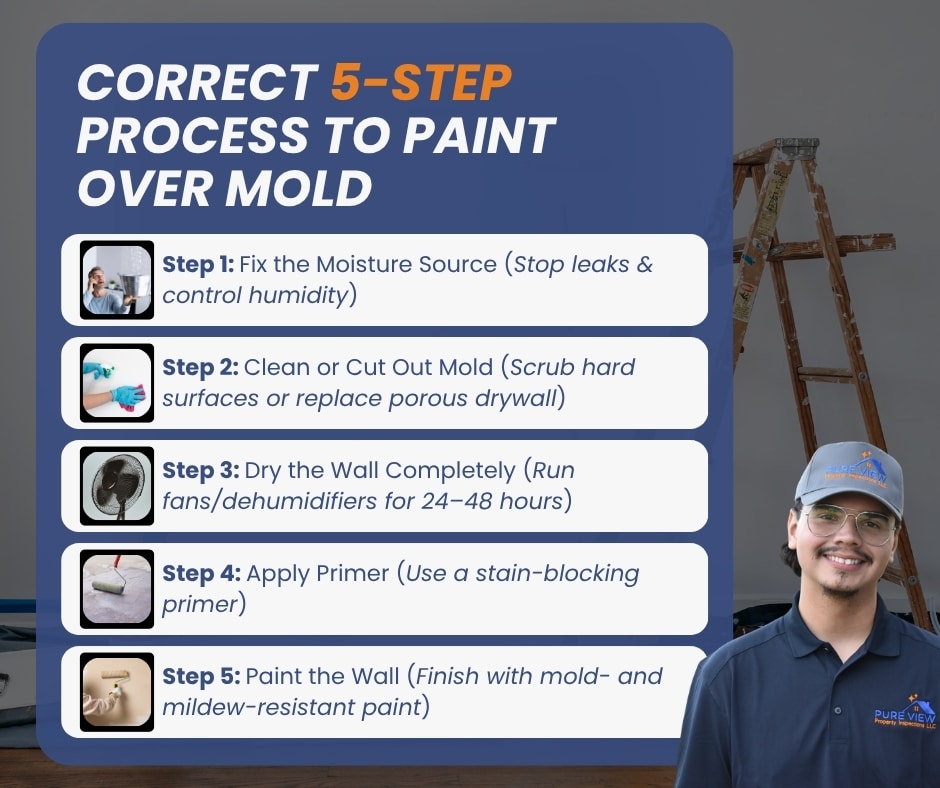
No, you should not paint over mold. The EPA says not to paint or caulk moldy surfaces. Paint won’t kill the mold, and it will often peel as the mold keeps growing underneath.
The right order is:
- Fix the moisture source.
- Clean or remove the mold.
- Let the wall dry fully.
- Prime with a stain-blocking primer.
- Paint with a mold- and mildew-resistant paint, especially in bathrooms and laundry rooms.
How to Keep Mold Off Your Walls
The best way to keep mold off your walls is to control moisture and keep air moving. These habits help most in the Pacific Northwest:
- Keep indoor humidity between 30% and 50%. A $10 to $20 hygrometer can track it.
- Run a dehumidifier in damp rooms and basements. A dehumidifier can help with black mold by keeping the air too dry for it to grow.
- Use bathroom and kitchen exhaust fans every time, and vent them outside.
- Pull furniture a few inches away from outside walls.
- Keep the heat on at a steady level in winter so walls stay warmer.
- Open blinds and curtains during the day to let walls dry.
- Fix leaks within 24 to 48 hours.
- Dry clothes in a vented dryer, not on racks indoors.
Related Questions to Explore
How do you get rid of mold on walls permanently?
To get rid of mold on walls for good, fix the moisture that caused it. Clean or remove the mold, dry the wall fully, and keep indoor humidity between 30% and 50%. Cleaning alone won’t stop mold if the wall stays damp.
Does bleach kill mold on walls?
Bleach kills mold on hard, non-porous surfaces. On drywall and other porous walls, it often only lightens the stain while the mold’s roots survive. If you use it, mix no more than 1 cup of bleach per gallon of water, ventilate the room, and never mix it with other cleaners.
How do you get rid of black mold on walls?
Clean small patches of black mold on walls the same way as other mold. Wear protective gear, apply vinegar or a soap solution, wipe gently, and dry the wall fast. If the patch is bigger than about 10 square feet or keeps returning, call a professional. Wet rooms need extra steps, so if you also need to get rid of black mold in the shower, focus on ventilation and caulk too.
Does mold on walls mean there is mold inside the wall?
Not always. Surface mold from condensation often stays on the surface. But a musty smell, soft drywall, bubbling paint, or mold that returns fast can mean moisture and mold inside the wall. A moisture inspection can confirm it.
What kills mold on drywall?
Vinegar and detergent can clean mold off painted or sealed drywall. Unpainted drywall is porous, so mold grows into the paper and gypsum. In that case, the damaged piece usually needs to be cut out and replaced.
How do you get rid of mold on bathroom walls?
Clean bathroom wall mold with vinegar or a mild soap solution, then dry the wall. To keep it from coming back, run the exhaust fan during showers and for at least 30 minutes after, and repaint with a mildew-resistant bathroom paint.
When to Call a Professional
You can handle small patches of wall mold yourself. The EPA says a moldy area smaller than about 10 square feet, roughly 3 feet by 3 feet, is usually a DIY job.
Call a professional when:
- The mold covers more than 10 square feet.
- It keeps returning after you clean it.
- You notice signs of mold inside the wall.
- The mold came from a leak, flood, or sewage backup.
- Someone in your home has asthma, allergies, or a weak immune system.
- You’re buying or selling a home and need documented results.
Pure View Property Inspections provides mold and moisture inspections across King and Snohomish Counties. We use infrared cameras, moisture meters, and lab-tested air and surface samples to find where the moisture is coming from. We don’t sell mold removal, so our findings are unbiased. You’ll get a clear, photo-rich report, often the same day.
Conclusion
- Small patches of mold on painted or sealed walls clean up with soap, water, or vinegar, followed by fast drying.
- Unpainted or soft drywall with mold usually needs to be replaced, not cleaned.
- Mold always has a moisture source. Find and fix it, or the mold will come back.
If your wall mold keeps coming back, or you think it’s inside the wall, we can help you find the cause. Schedule a mold inspection with Pure View Property Inspections or get a quote today.