
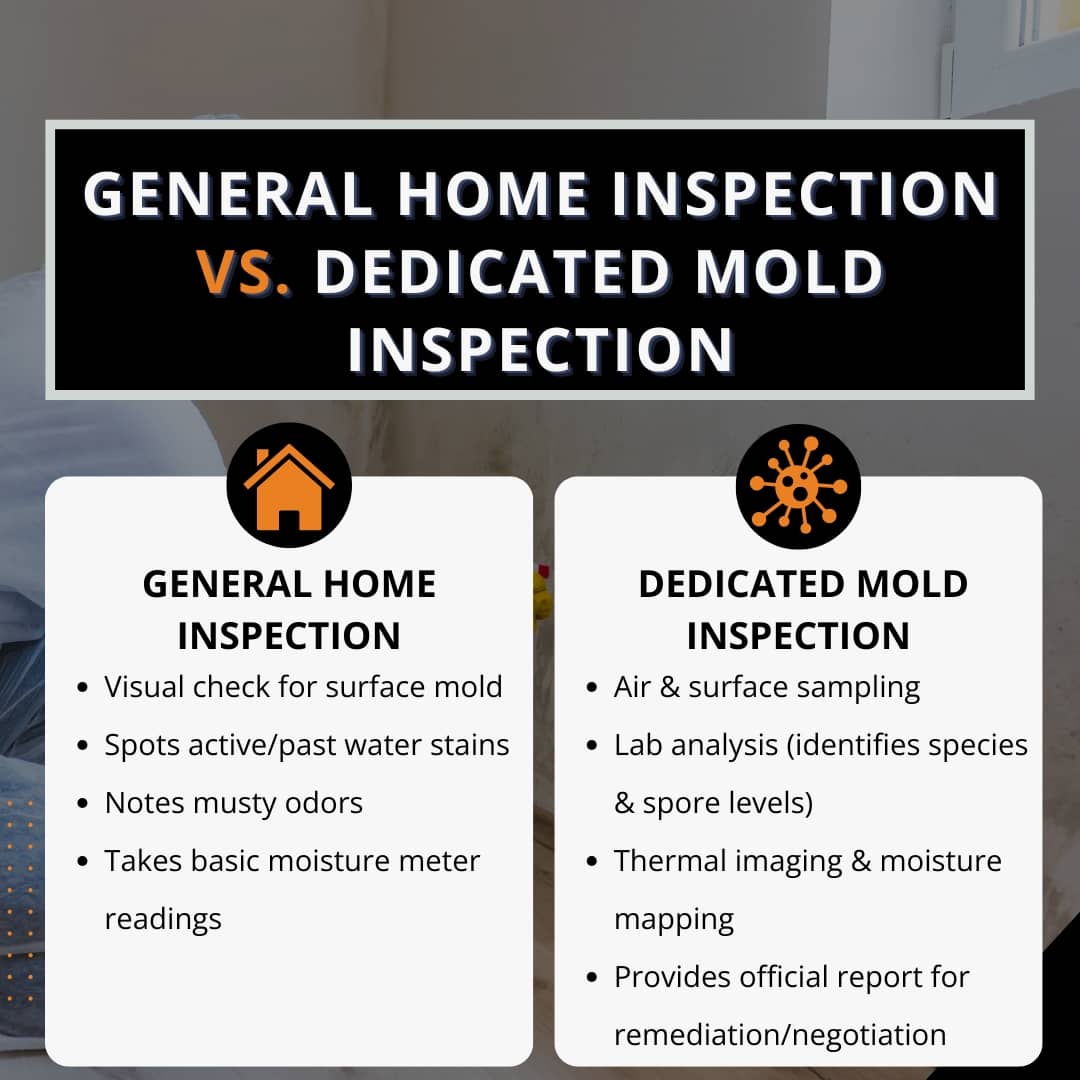
A standard home inspection will catch the signs of mold, visible growth, water stains, a musty smell, and elevated moisture readings, but it does not test for mold or identify what kind it is.
That requires a separate mold inspection with air and surface sampling sent to a lab. In other words, a general inspector tells you “there appears to be mold and a moisture problem here,” while a mold inspection tells you “this is the species, this is the spore level, and here’s where the moisture is coming from.”
Here’s exactly where the line falls, and when a Pacific Northwest homeowner should order the mold inspection, too.
What a General Home Inspection Catches
During a standard home inspection, mold-related findings come up often, and a good inspector documents all of them. We look for and photograph:
- Visible mold or discoloration on walls, ceilings, framing, and around windows
- Water stains that signal past or active leaks
- Musty or earthy odors, which often mean hidden moisture
- Elevated moisture readings taken with a moisture meter on walls, ceilings, and subfloors
- Conducive conditions, the situations that let mold grow: poor drainage, missing vapor barriers, plumbing leaks, and inadequate ventilation in crawlspaces and attics
All of that is part of the broader evaluation covered in our residential home inspection. If there’s a moisture problem, a thorough inspection will usually surface the evidence.
What a General Inspection Does NOT Do
Here’s the important boundary. A general home inspection is a visual assessment. Per the InterNACHI Standards of Practice, a home inspector is not required to determine the presence of mold, mildew, or fungus. That means a standard inspection will note and photograph what’s visible, but it will not:
- Take air or surface samples
- Send anything to a lab
- Identify the mold species or measure spore concentration
- Open walls or move into inaccessible areas to find hidden mold
So if your inspector writes “possible microbial growth observed in the crawlspace,” that’s not a diagnosis; it’s a flag telling you the next step is a dedicated mold inspection.
What a Dedicated Mold Inspection Adds
A mold inspection is a focused investigation that goes well beyond the visual. It typically includes:
- Air sampling that compares indoor spore counts against an outdoor control sample
- Surface sampling (swab or tape-lift) to confirm and identify mold on a visible patch
- Lab analysis by an accredited lab that names the species and reports concentrations
- Moisture mapping and thermal imaging to trace where water is getting in and find moisture hidden behind walls
Pure View’s mold and moisture inspection uses thermal imaging and moisture meters to find the hidden moisture that feeds mold, then backs it with sampling and a written report.
That report is what you take to a remediation contractor, or use as leverage in a real estate negotiation.
When You Should Get a Mold Inspection
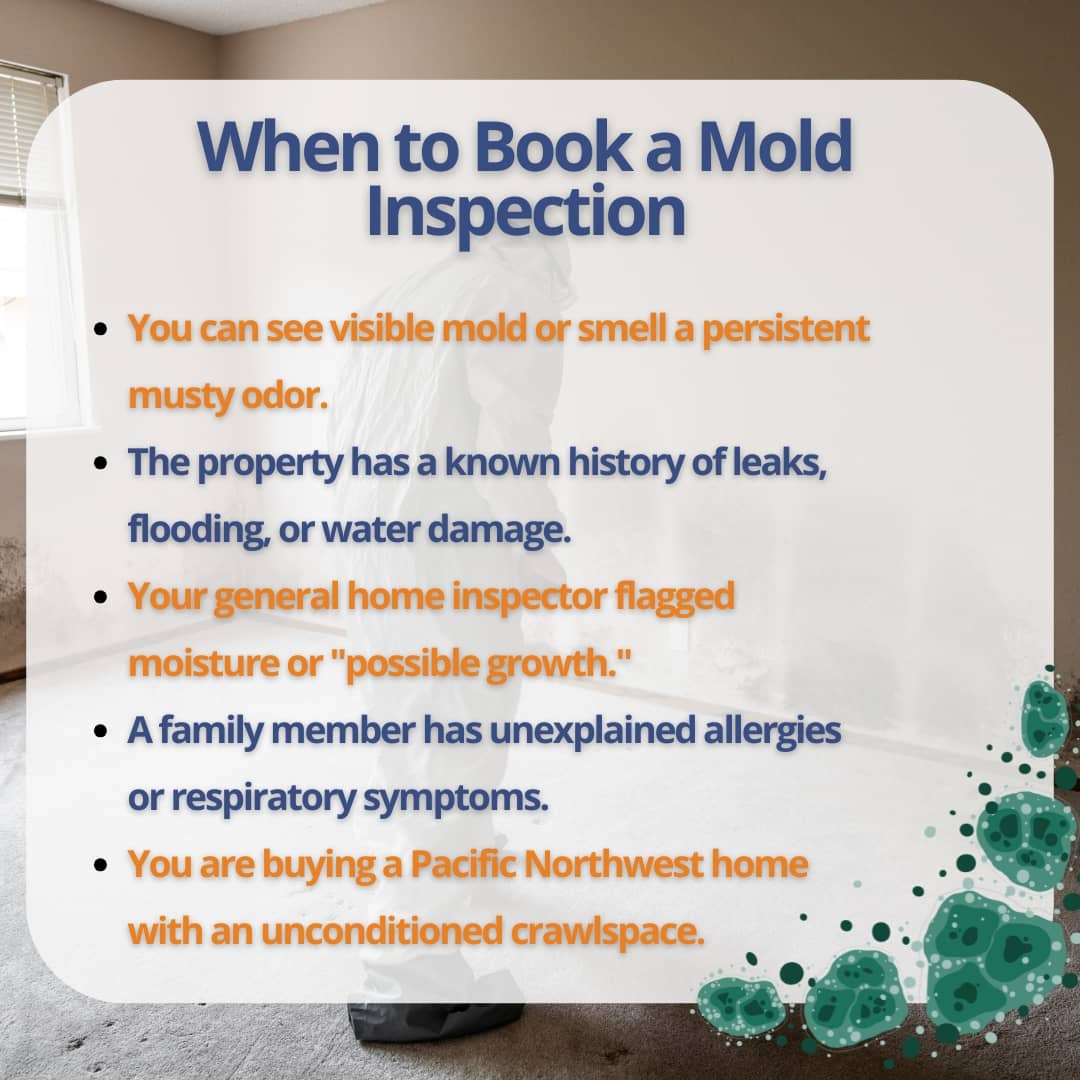
You don’t need a separate mold inspection on every home. Order one when:
- There’s visible mold, or you can smell a persistent musty odor
- The home has a history of leaks, flooding, or water damage
- Someone in the household has unexplained respiratory symptoms or allergies
- Your general inspector flagged moisture or possible growth
- You need post-remediation clearance to confirm a previous mold problem was fixed
In a real estate purchase, a mold inspection done during your inspection contingency gives you documented grounds to renegotiate or walk away. Mold doesn’t automatically “fail” a home inspection, but it’s a defect that can change a deal. For the bigger picture of how the inspection process works, see what to expect during a home inspection in Seattle.
Why Mold Is So Common in Pacific Northwest Homes
This matters more here than in most of the country. Seattle sees more than 37 inches of rain across roughly 150 rainy days a year, which keeps soil and crawlspaces damp for much of October through May.
Many local homes sit over unconditioned crawlspaces where ground moisture migrates up into the wood framing, and crawlspace humidity often runs in the 70 to 80 percent range, well above the roughly 60 percent where mold starts to thrive.
That’s why crawlspaces, attics, and rim joists are the leading places we find mold in Pacific Northwest homes, and why moisture problems here are the rule rather than the exception.
The EPA puts it simply in its guidance: the key to mold control is moisture control, and water-damaged areas should be dried within 24 to 48 hours. Aging plumbing and crawlspace moisture also rank among the common issues we find in older Seattle homes.
Related Questions to Explore
Does a home inspection include mold testing?
No. A general inspection notes visible mold and moisture but doesn’t sample or lab-test for mold unless you order a separate mold inspection.
What does a mold inspector look for?
Visible growth, water stains, moisture-meter and thermal readings, and conducive conditions, plus air and surface samples that go to a lab for species and concentration.
Should I get a mold inspection before buying a house?
Get one if there’s visible mold, a musty odor, or a leak or flood history, or if your general inspector flagged moisture. It gives you negotiation leverage under your inspection contingency.
Can mold fail a home inspection?
Mold doesn’t formally “fail” an inspection, but it’s flagged as a defect and can lead to renegotiation, repairs, or a buyer walking away.
When to Call a Professional
Call for a dedicated mold inspection when you can see or smell mold, when a general inspection flags moisture, when there’s a history of water damage, or when you want clearance testing after remediation.
And if you’re buying a home in the Pacific Northwest, build the question into your inspection from the start. Buyers across Seattle, Kirkland, Bothell, and the rest of King and Snohomish County can schedule a mold and moisture inspection with Pure View Property Inspections.
Conclusion
A general home inspection is your early-warning system for mold: it spots the visible growth, the stains, the musty smell, and the moisture that feeds it. What it can’t do is test, identify, or measure, and that’s the job of a dedicated mold inspection.
In a damp Pacific Northwest climate where crawlspace and attic moisture are common, knowing the difference helps you decide when the extra step is worth it. If your inspection turns up moisture or you just want certainty before you buy, reach out to Pure View Property Inspections today.