
Changing a water heater anode rod takes about an hour and one inexpensive part, and doing it on schedule can roughly double the life of your tank. The anode rod is a sacrificial metal rod that corrodes on purpose, so your steel tank doesn’t.
Once it’s used up, the tank itself starts to rust, and that’s when leaks and failure follow. To replace it, you shut off the power and water, loosen the rod with a 1-1/16 inch socket, swap in a new one, and you’re done.
Here’s the full process, how often to do it, which rod to buy, and why it matters even more in the Seattle area’s soft water.
What an Anode Rod Is and Why It Matters
An anode rod is a long metal rod, usually magnesium or aluminum over a steel core, that screws into the top of your water heater tank. It works on a simple principle of corrosion: the rod’s metal is more reactive than the steel tank, so it corrodes first, sacrificing itself to protect the tank lining.
That’s why it’s called a sacrificial anode.
As long as the rod has material left, your tank stays protected. Once the rod is eaten down to its bare steel core wire, there’s nothing left to corrode except the tank. From that point, the steel rusts from the inside, and a rusted tank can’t be repaired, only replaced.
The U.S. Department of Energy lists checking the anode rod as part of routine maintenance that extends a water heater’s life, noting that storage water heaters typically last about 10 to 15 years.
Replacing a $30 rod a couple of times can push your tank toward the long end of that range instead of the short end.
How Often to Replace It (and the Seattle Water Factor)
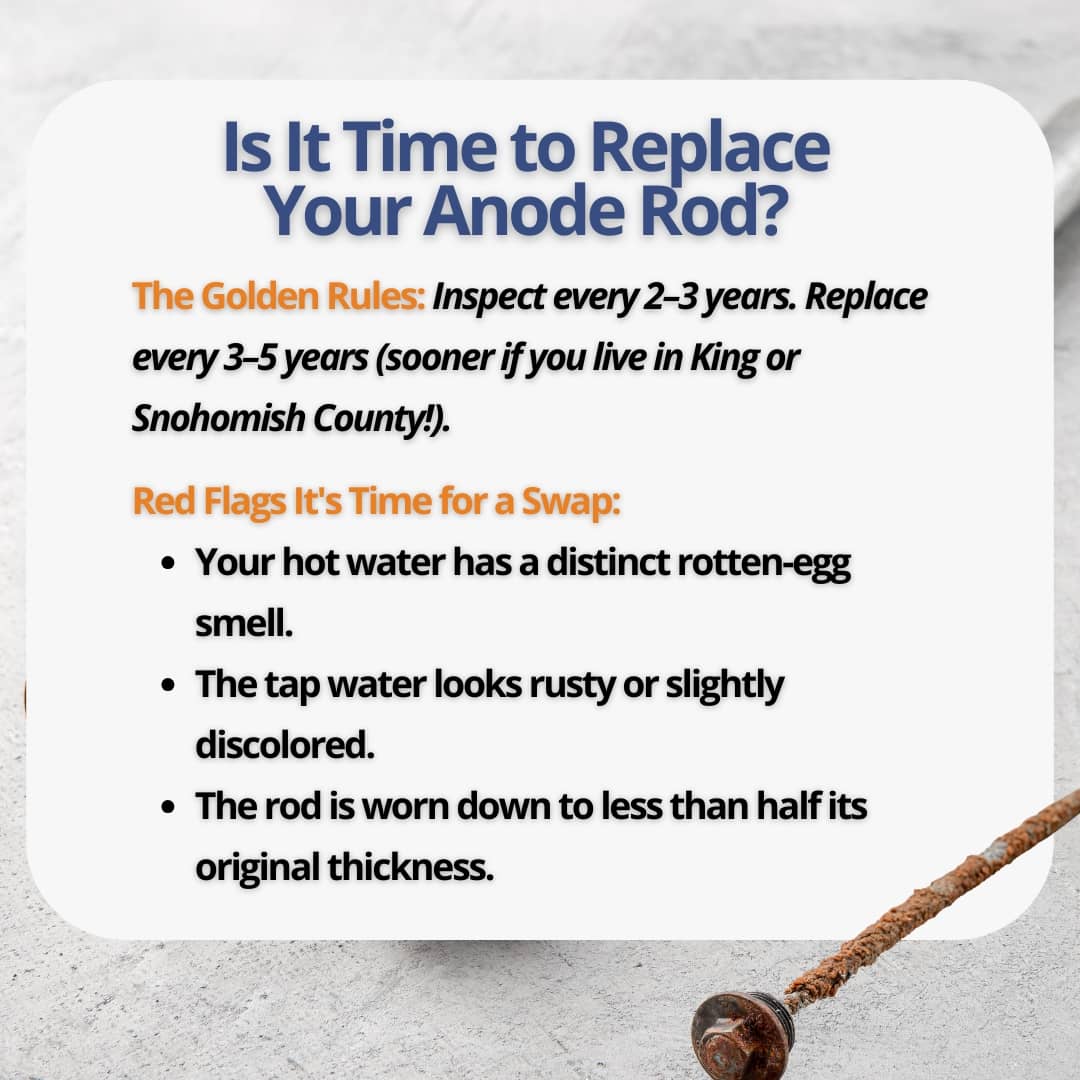
As a general rule, inspect the anode rod every two to three years and replace it every three to five. Replace it sooner if the rod is worn to less than half its original thickness or down to the core wire.
Water chemistry changes that timeline, and this is where Seattle homeowners should pay attention.
The region’s water comes largely from rain and snowmelt and is very soft, with low mineral content. Soft water is actually more aggressive on magnesium anode rods, so they can deplete faster here than in hard-water regions.
If you’re in King or Snohomish County, it’s worth checking your rod on the earlier side, and soft water is also why many local homeowners get the best results from an aluminum/zinc or a powered rod, more on that below.
Tools and Materials You’ll Need
- A new anode rod sized for your heater (magnesium, aluminum/zinc, or a powered rod)
- A 1-1/16 inch deep socket
- A breaker bar or a 1/2 inch impact wrench (rods are usually seized in tight)
- A garden hose and a bucket
- Teflon tape or pipe-joint compound
- A helper to steady the tank
- A collapsible/segmented rod, if you have low ceiling clearance above the heater
How to Change the Anode Rod, Step by Step
- Cut the power. For an electric heater, switch off the breaker. For gas, set the control to pilot or off.
- Shut off the cold water supply valve at the top of the tank, then open a hot-water faucet somewhere in the house to relieve pressure.
- Drain a few gallons. Connect a hose to the drain valve and let out two or three gallons. The water is hot, so be careful.
- Find the rod. The hex head is on top of the tank, sometimes hidden under a plastic cap or beneath the sheet-metal top.
- Loosen the rod. Fit the 1-1/16 inch socket on the hex head and break it free with a breaker bar or impact wrench. Have your helper steady the tank so it doesn’t spin and stress the water or gas lines.
- Pull the old rod out. If you’re short on overhead clearance, this is where a collapsible rod earns its keep.
- Install the new rod. Wrap the threads with Teflon tape or pipe dope, thread it in by hand, then tighten.
- Refill and restore. Close the drain, turn the cold water back on, and open a hot tap until water runs steadily to clear the air. Then restore power or gas.
The whole job runs about one to two hours, most of it spent breaking the old rod loose.
Magnesium vs. Aluminum vs. Powered Rods
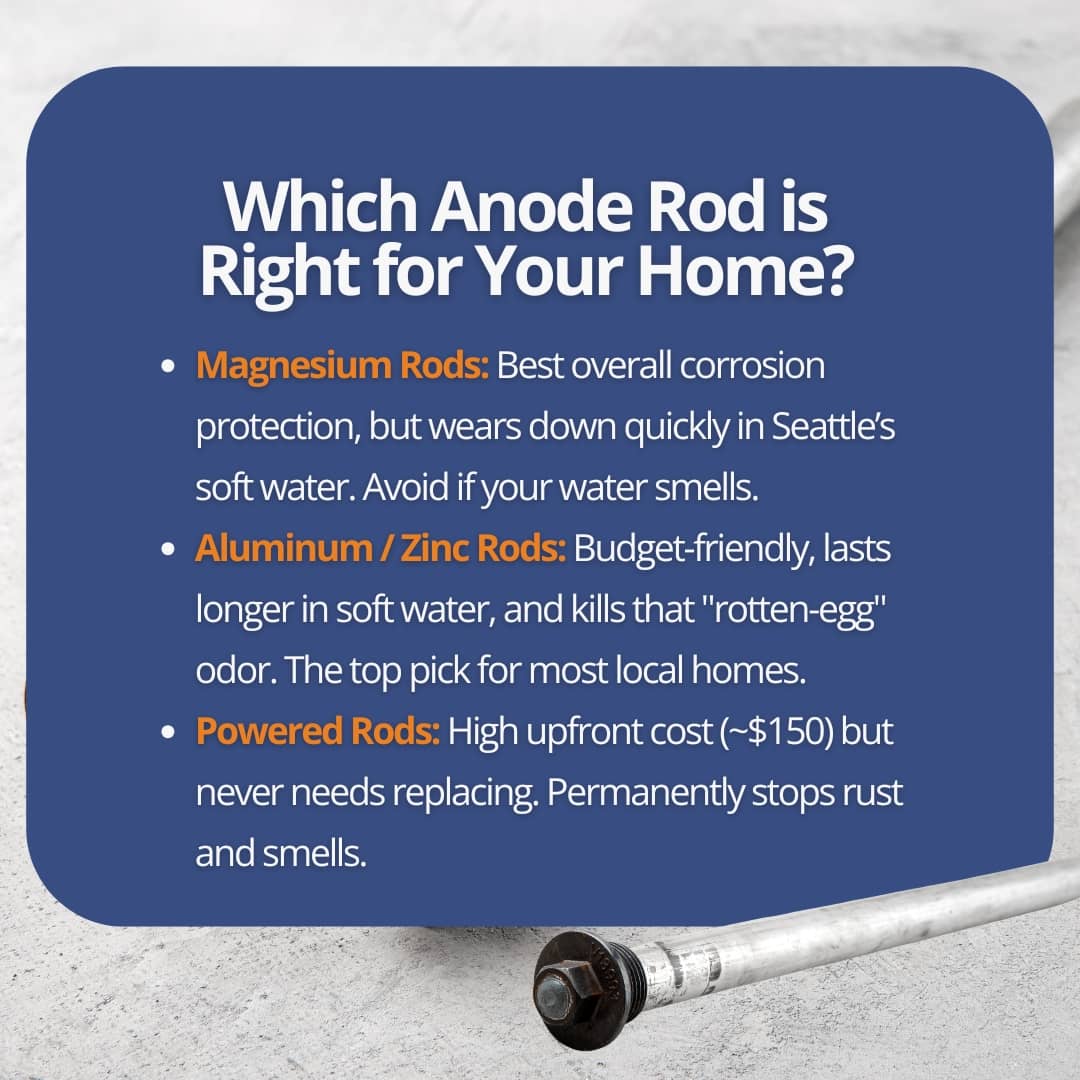
- Magnesium gives the best corrosion protection and is common in soft-water areas, but it depletes faster and can react with bacteria to cause a rotten-egg smell.
- Aluminum/zinc rods last longer, cost less, and are the usual fix for smelly water. A good choice for many Seattle-area homes.
- Powered (impressed-current) rods plug into an outlet and never deplete, so you install one and forget it. They cost more up front (around $150) but are popular where rods disappear quickly or where the rotten-egg smell keeps coming back.
If your hot water smells like rotten eggs, that’s hydrogen sulfide gas, often produced when bacteria react with a magnesium rod. Switching to an aluminum/zinc or powered rod usually solves it.
What a Home Inspector Sees (and Why the Anode Rod Decides Your Tank’s Lifespan)
Here’s the part most DIY guides leave out. During a home inspection, we can’t pull the anode rod; it’s sealed inside the tank, and removing it isn’t part of a standard inspection.
But we see the consequences of a neglected one all the time: rust staining around the fittings and the temperature-pressure relief valve, corrosion at the base of the tank, sediment that hurts efficiency, and, of course, the data plate that tells us the unit’s age.
That invisible rod is often the difference between a water heater that lasts six years and one that lasts fifteen. When we inspect a water heater, we’re reading those external clues to estimate how much life is left, which is one piece of the bigger picture covered in our residential home inspection.
Aging water heaters and corroded plumbing are also among the common issues we find in older Seattle homes, so if you’re buying, it’s worth knowing what to look for, as we cover in what to expect during a home inspection in Seattle.
Related Questions to Explore
How often should you replace an anode rod?
Inspect it every two to three years and replace it every three to five years, or sooner if it’s worn below half its thickness. In soft Seattle-area water, check on the earlier side.
What happens if you don’t replace the anode rod?
Once the rod is used up, the steel tank starts rusting from the inside and can leak or fail years earlier than it should.
How do I know if my anode rod is bad?
Telltale signs are rotten-egg-smelling hot water, rusty or discolored water, or a rod that’s worn down to the bare core wire when you inspect it.
Magnesium or aluminum anode rod?
Magnesium protects better but depletes faster and can cause odor. Aluminum/zinc lasts longer and usually cures the rotten-egg smell, which makes it a strong pick for many local homes.
Can I replace the anode rod myself?
Yes. With a 1-1/16 inch socket and ideally an impact wrench, most homeowners can do it in one to two hours. The hardest part is breaking the seized rod loose.
When to Call a Professional
Call a plumber if the rod is rusted in so tightly it won’t budge without risking damage to the tank, if the tank is already showing rust at the seams or weeping at the base, or if your heater is past 12 years old, in which case replacement may make more sense than maintenance.
And if you’re buying a home, a home inspection will tell you the water heater’s age and condition before you commit. Buyers across Seattle, Bellevue, Bothell, and the rest of King and Snohomish County can schedule with Pure View Property Inspections.
Conclusion
Changing the anode rod is one of the highest-return maintenance tasks a homeowner can do: an hour of work and a cheap part in exchange for years of extra tank life.
Check it every few years, replace it before it’s gone, and in the Seattle area’s soft water, consider an aluminum/zinc or powered rod to fight faster depletion and the rotten-egg smell.
When you’re buying a home and want to know how much life that water heater really has left, reach out to Pure View Property Inspections to schedule today.